b’sd
Visual art is a language using color, line and shape to speak. Sometimes, due to overwhelming emotion, we are unable to form coherent words and sentences to articulate what we want to say, but knowing other languages of expression can help us communicate, or help process, our emotions.
This book is a tribute to those who have suffered unspeakable pain. In the aftermath of a time words cannot touch, we as artists use visual language to process our own emotion and in so doing, offer a tool to help others process their feelings as well.
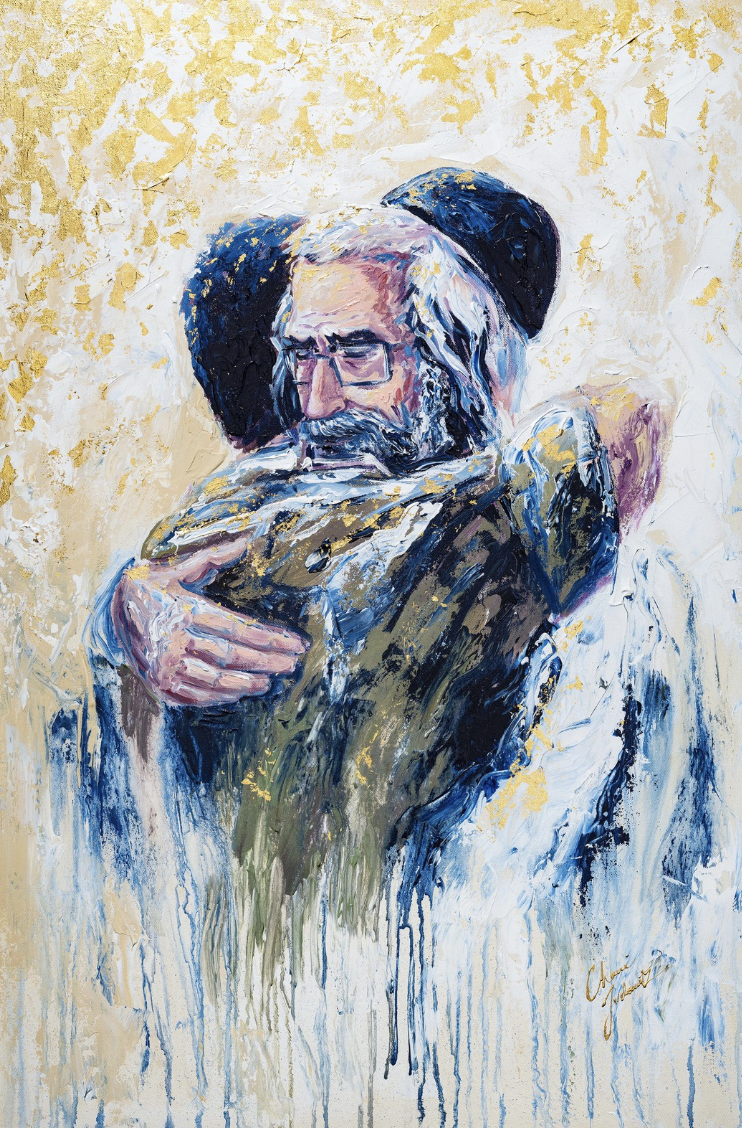
Throughout this book, students will encounter nine different artistic languages—realism, Impressionism, abstraction, symbolism, assemblage, collage, text-based art, sculpture, and digital art. Each offers a different way of seeing, expressing, and responding to experiences that may be difficult to put into words.
There is no single or “right” way to respond to grief, loss, trauma, or collective tragedy, just as there is no single way to make art. One student may communicate through a recognizable object or familiar landscape; another through color, texture, fragments, symbols, words, or abstract forms.
Art gives us the opportunity to release what we are carrying. Thoughts that may seem overwhelming internally can be externalized – placed onto the page, assembled from fragments, shaped into three-dimensional form, represented through symbols, or manipulated within a digital space. Once something exists outside oneself, it can be observed, considered, changed, arranged, and given meaning. The student moves from simply experiencing an emotion to actively shaping how that experience is represented.
Art also makes room for complexity. Difficult experiences rarely produce one emotion at a time. Beauty can coexist with sadness; fear with courage; absence with memory; destruction with rebuilding. Through artistic choices—color and shadow, fragmentation and reconstruction, scale and space, representation and abstraction—students can hold seemingly contradictory experiences together without needing to resolve them prematurely.
Finally, art allows individual reflection to become part of something larger. When students encounter one another’s work respectfully—responding with curiosity and empathy rather than judgment—they learn that experiences different from their own can also be witnessed and honored. Displaying the completed works in a classroom, memorial wall, exhibition, or shared community space transforms private acts of creation into a collective act of remembrance and resilience.
The goal is not to suggest that making art erases grief or resolves trauma. Rather, art can provide a language for what is difficult to say, a form for what feels difficult to contain, and a space in which students can encounter difficult experiences while retaining choice and creative agency.
Through art, give yourself permission to move forward if you feel blocked, scared or confused.
Across these nine artistic forms, the methods differ, but the invitation remains the same: to observe, express, externalize, transform, connect, and create meaning.
In that process, art can become more than a representation of experience. It can become one pathway through it. Our hope is that this work can offer visual art as a tool to help students, and ourselves, heal.
Click to access an online collection of visual art lessons based on our community’s responses to October 7, 2023:
WHEN WORDS FAIL – 2026 Edition